





 Byadmin

What Actions Count as Domestic Violence Under the Law?
Share your love
You Might Be Surprised by What the Law Considers Domestic Violence

Here’s a question most people never think about until they absolutely have to: What actually counts as domestic violence under the law?
When most of us hear “domestic violence,” our minds jump straight to physical abuse — bruises, broken bones, the stuff you see on crime dramas. But the legal definition is a whole lot wider than that. And honestly? That gap between what people think the law covers and what it actually covers can cost someone their safety, their children, or their freedom.
Whether you’re a parent worried about your co-parent’s behavior, a spouse trying to understand your rights, someone going through a divorce, or just a person trying to make sense of something happening to you or someone you love — this guide is for you.
Let’s break it all down, plainly and honestly.
First, Who Does Domestic Violence Law Apply To?

Before we get into the “what,” let’s talk about the “who.”
Domestic violence laws in the U.S. don’t just cover married couples. Depending on the state, the law typically protects:
- Current and former spouses
- Dating partners (current or past)
- People who share a child together
- Household members or roommates
- Parents and adult children
- Siblings or other family members
So if you’re divorced and your ex is making your life miserable, or you’re a dad worried about what your child’s mother is doing — the law may very well apply to your situation. Don’t assume it doesn’t.
Important: Every state has its own domestic violence statutes, so specific definitions and protections vary. Always check your state’s laws or consult a local family law attorney.
The 7 Major Types of Actions That Count as Domestic Violence
1. Physical Abuse — The Most Obvious One

Let’s start here because yes, this is still the cornerstone. Physical abuse includes any intentional act that causes physical harm or injury. But here’s what surprises people — it doesn’t have to leave a mark.
Physical abuse under the law can include:
- Hitting, punching, slapping, or kicking
- Choking or strangling (this is taken very seriously by courts)
- Pushing, shoving, or grabbing
- Throwing objects at someone
- Burning, biting, or scratching
- Restraining someone against their will
- Denying someone medical care
- Threatening to do any of the above
That last one is critical. You don’t have to actually throw the punch for it to be domestic violence. A credible threat is often enough.
2. Emotional and Psychological Abuse — Yes, This Is Illegal

Now we’re getting into territory a lot of people don’t realize is covered. Emotional abuse is harder to see, but courts increasingly recognize it — especially in family law proceedings.
Emotional and psychological abuse includes:
- Constant criticism, humiliation, or name-calling meant to erode self-worth
- Gaslighting — making someone doubt their own memory or perception of reality
- Isolation — cutting someone off from friends, family, or support systems
- Threats involving children, pets, or loved ones
- Public humiliation or shaming
- Controlling behavior — dictating what someone wears, where they go, who they talk to
I know what you might be thinking: “But how do you prove that in court?” Fair question. It’s harder than physical abuse, but it’s not impossible. Pattern documentation, witness testimonies, texts and emails — courts do take this seriously, especially when children are involved.
3. Sexual Abuse — Within Relationships Too

This one is still misunderstood, even in 2025. Let me say this clearly: Marital rape is a crime in all 50 states.
Sexual abuse in a domestic context includes:
- Sexual assault or rape (including by a spouse or partner)
- Coercion into sexual activity through threats or manipulation
- Forcing someone to watch or perform sexual acts
- Non-consensual recording of sexual acts
- Using sex as punishment or reward to control behavior
If you or someone you know is in this situation, the National Sexual Assault Hotline (1-800-656-HOPE) is confidential and available 24/7.
4. Financial and Economic Abuse — The Control Nobody Talks About
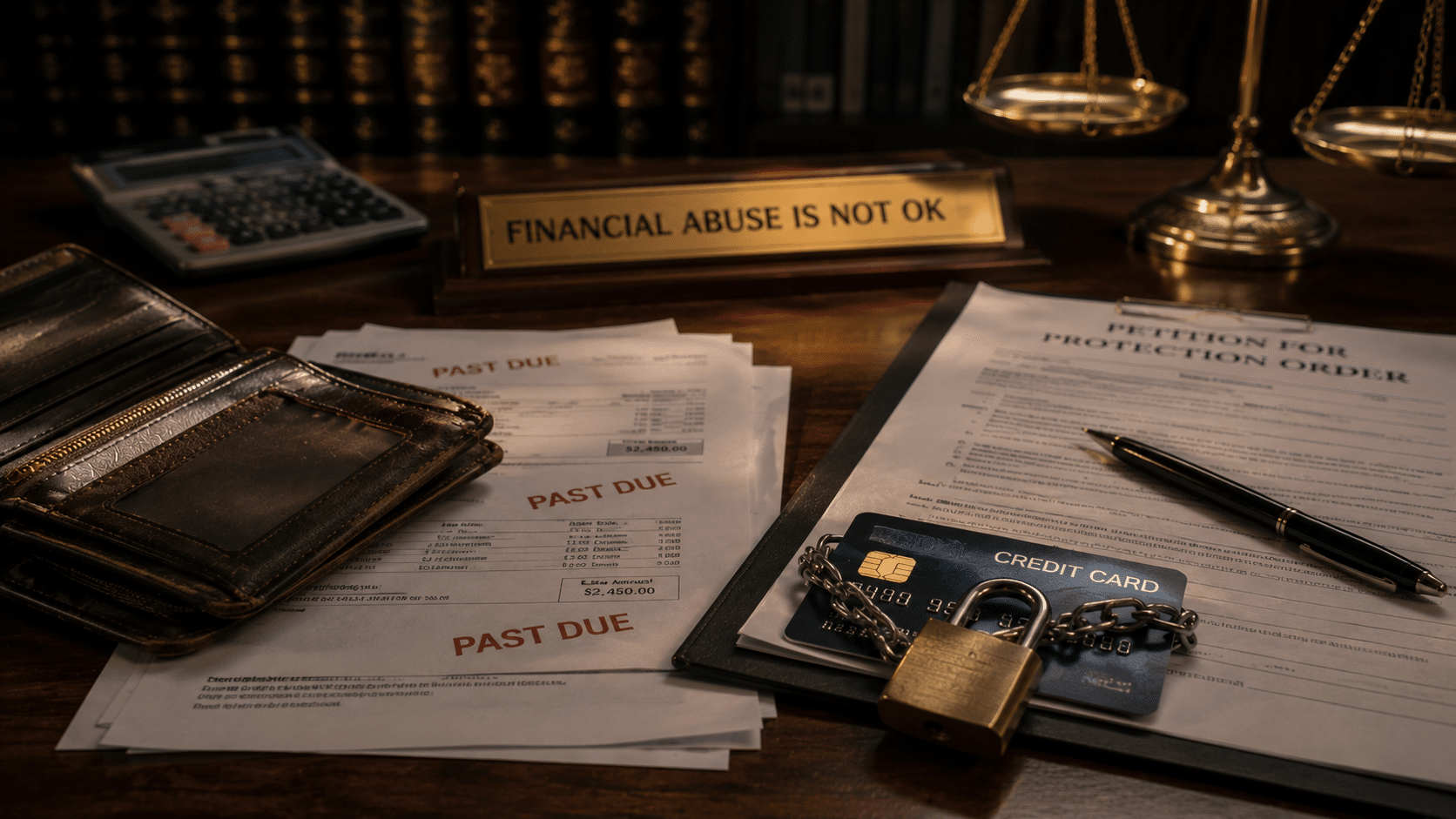
This is one of the most underreported forms of domestic violence, and it’s devastatingly effective as a control tactic. Why? Because it traps people. If you can’t access money, how do you leave?
Financial abuse looks like:
- Controlling all access to money and forcing someone to ask for every dollar
- Preventing a partner from working or sabotaging their employment
- Running up debt in a partner’s name without consent
- Stealing money or assets
- Refusing to pay court-ordered child support or alimony as a power move
- Withholding basic necessities — food, clothing, medicine — as punishment
For divorced parents especially, financial abuse can extend into post-separation life. Withholding child support, hiding assets during divorce proceedings, or using money to manipulate custody arrangements can all factor into domestic violence determinations.
5. Stalking and Harassment — Even After Separation

Separation doesn’t always mean safety. In fact, statistically, the risk of violence often increases when someone tries to leave an abusive relationship.
Under federal law (and state laws), stalking is a crime. It includes:
- Following someone or showing up uninvited repeatedly
- Surveilling someone’s home, workplace, or daily routine
- Sending repeated unwanted communications
- Using GPS trackers or spyware on someone’s devices
- Threatening someone’s friends, family members, or pets
- Enlisting others to monitor or harass on your behalf (sometimes called “proxy stalking”)
Here’s something that catches a lot of people off guard: you don’t have to feel afraid for it to legally be stalking. In many states, the standard is whether a reasonable person would feel fear — not whether the victim actually does.
6. Digital and Cyber Abuse — The 21st Century Problem
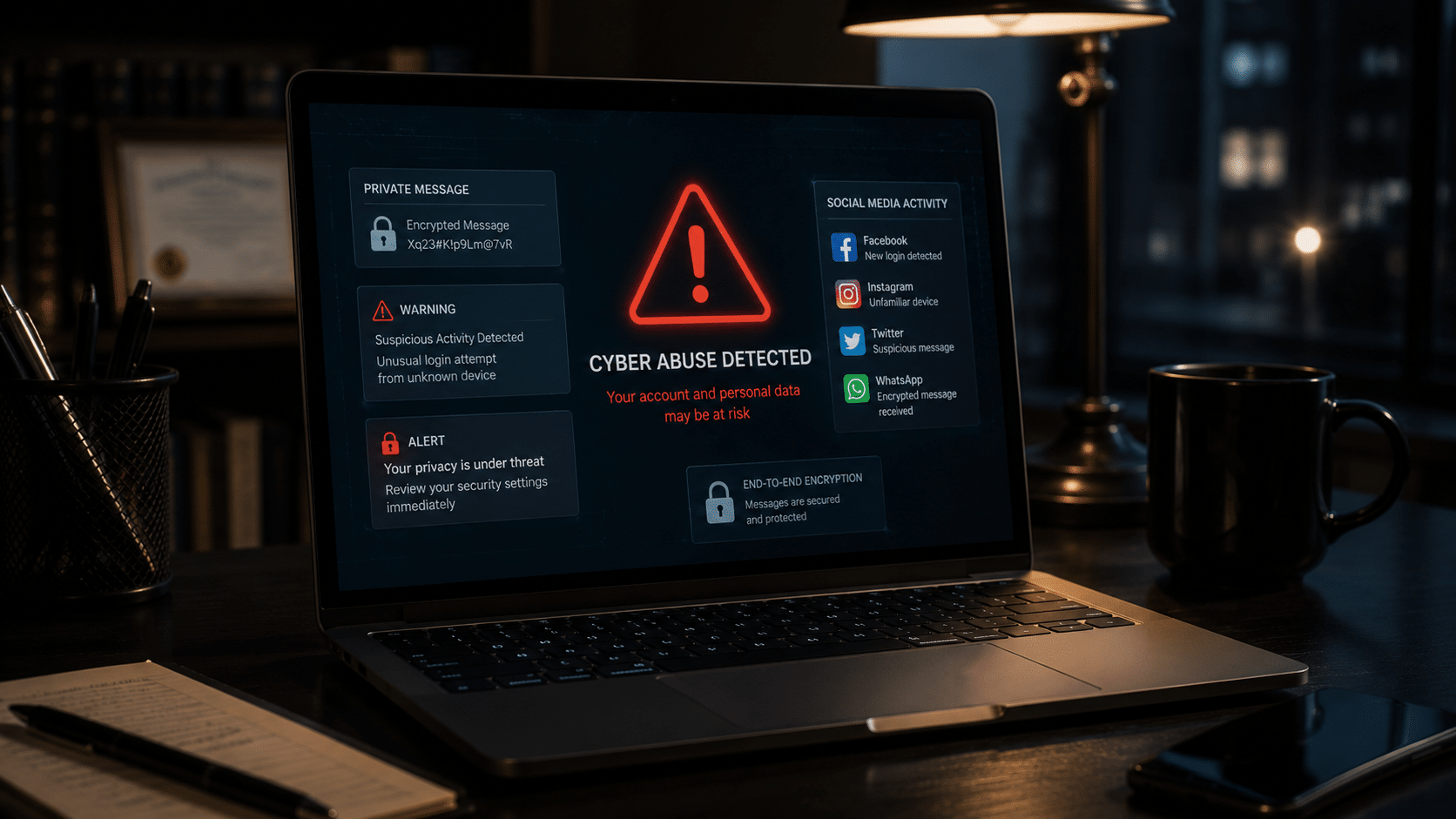
We live online now. And abusers have adapted. Cyber abuse is increasingly recognized in domestic violence law across many states, and it’s a rapidly growing area.
Digital abuse includes:
- Monitoring texts, emails, or social media without consent
- Hacking into accounts or devices
- Posting intimate images without consent (revenge porn — illegal in most states)
- Doxxing — publicly releasing someone’s private information
- Creating fake profiles to harass or impersonate
- Sending threatening messages across any digital platform
- Controlling or monitoring someone’s use of technology
For parents sharing custody, digital abuse can also mean using co-parenting apps to send threatening or manipulative messages, or using children as messengers to communicate threats.
7. Abuse Involving Children — A Particularly Serious Category

When children are present in or affected by domestic violence situations, the stakes go up significantly. Courts consider:
- Exposing children to domestic violence (even if they’re not directly harmed)
- Using children as pawns — passing threatening messages through kids
- Threatening to harm or take children as a control tactic
- Parental kidnapping or violation of custody orders
- Physical, emotional, or sexual abuse of children
Many states have laws that specifically address the impact of domestic violence on child custody determinations. If a court finds that one parent has committed domestic violence, it can significantly affect custody and visitation arrangements.
Quick Reference: Domestic Violence Actions by Type
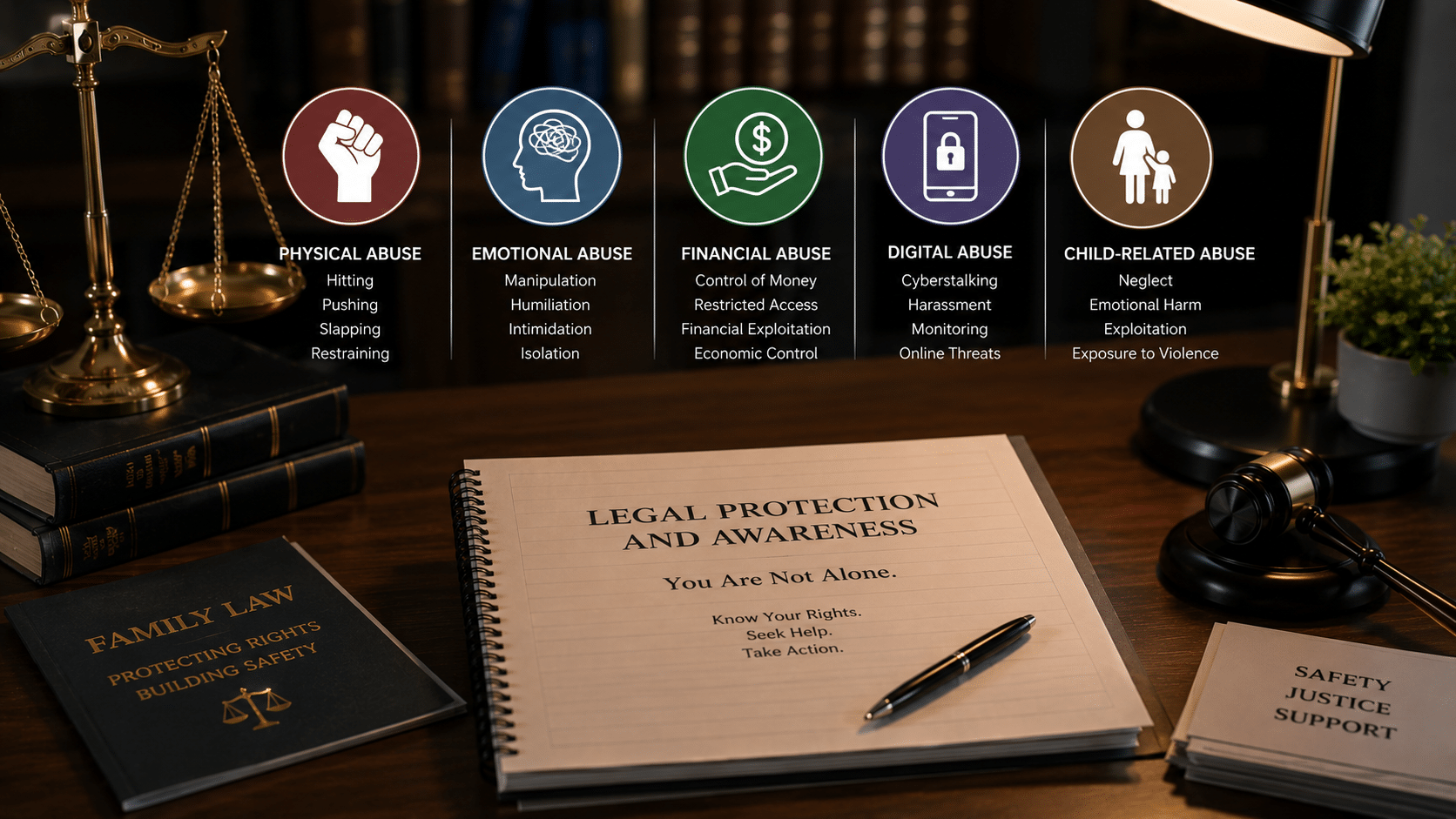
| Type of Abuse | Examples | Legally Recognized? |
|---|---|---|
| Physical | Hitting, choking, threatening harm | ✅ Yes, universally |
| Emotional/Psychological | Gaslighting, isolation, humiliation | ✅ Yes, increasingly |
| Sexual | Marital rape, coercion | ✅ Yes, all 50 states |
| Financial | Controlling money, sabotaging work | ✅ Yes, in many states |
| Stalking/Harassment | Following, surveilling, repeated contact | ✅ Yes, federal + state |
| Digital/Cyber Abuse | Hacking, revenge porn, monitoring | ✅ Yes, growing coverage |
| Child-Related | Exposing kids to violence, using as pawns | ✅ Yes, heightened penalties |
Frequently Asked Questions
Does domestic violence only apply if we’re married?
Absolutely not. Most state laws cover dating partners, co-parents, household members, and family members regardless of marital status. If you share a child with someone, you are almost certainly covered under domestic violence statutes — even if you never lived together or were never in a relationship.
Can a man be a victim of domestic violence?
Yes, 100%. Domestic violence affects people of all genders. Men are victims too, and the law applies equally. The stigma around men reporting abuse is real, but so are the legal protections. If you’re a father or husband experiencing abuse, you have the same rights as any other victim.
What if there’s no physical evidence — can I still report it?
Yes. Courts consider patterns of behavior, documented communications (texts, emails, voicemails), witness statements, and your own testimony. Emotional, financial, and digital abuse can be demonstrated through evidence even without physical injuries. Keep records of everything — dates, times, screenshots, anything that documents what’s happening.
How does domestic violence affect child custody?
This is huge. Courts in the U.S. are required to consider domestic violence when making custody decisions. A history of domestic violence can result in:
- Sole custody being awarded to the non-abusive parent
- Supervised visitation for the abusive parent
- Mandatory completion of batterer intervention programs
- Restrictions on contact between the abusive parent and the child
If you’re involved in a custody case and domestic violence is a factor, get a family law attorney involved immediately.
What’s the difference between a restraining order and a protective order?
These terms are often used interchangeably, but there are distinctions:
- Emergency Protective Order (EPO): Issued by police at the scene, typically lasts 3-7 days
- Temporary Restraining Order (TRO): Issued by a court, lasts until the full hearing (usually 2-3 weeks)
- Permanent Restraining Order: Issued after a full court hearing, can last 1-5 years or longer
Violating any of these is a criminal offense.
Can domestic violence charges affect divorce or asset division?
In some states, yes. While most U.S. states are “no-fault” divorce states, documented domestic violence can still influence:
- Spousal support / alimony decisions
- Division of property (in some states)
- Child custody and support arrangements
- Criminal charges that run parallel to civil proceedings
What Should You Do If You Recognize Any of This?
If you’ve read through this list and something clicked — whether you’re the one experiencing this or you’re worried about someone you love — here’s where to start:
1. Document everything. Texts, emails, screenshots, photos of injuries, dates and descriptions of incidents. Keep copies somewhere safe that your abuser can’t access (a trusted friend’s house, a secure cloud account).
2. Reach out for support. You don’t have to figure this out alone.
- National Domestic Violence Hotline: 1-800-799-SAFE (7233) — 24/7, confidential
- National Sexual Assault Hotline: 1-800-656-HOPE (4673)
- Crisis Text Line: Text HOME to 741741
3. Talk to a lawyer. Especially if children are involved. A family law attorney can help you understand your specific state’s protections and your options.
4. Create a safety plan. If you’re still in the situation, work with a domestic violence advocate to create a plan for staying safe — and for leaving when the time is right.
5. Know that leaving takes time. On average, a victim of domestic violence attempts to leave 7 times before leaving for good. That’s not weakness — that’s the reality of what abuse does to a person. Patience and support make a difference.
The Bottom Line
Domestic violence is not just about black eyes and broken bones. It’s about power and control — and the law has evolved to recognize that. Whether it’s financial strangling, digital surveillance, psychological manipulation, or physical force, the legal system in the U.S. increasingly provides pathways to protection.
Knowing what counts as domestic violence under the law isn’t just academic knowledge. It can be the difference between staying silent and speaking up. Between staying trapped and finding a way out.
If any part of this resonated with you — whether you’re a parent, a spouse, someone going through a divorce, or someone supporting a loved one — please don’t wait. The first step is always the hardest, but it’s also the most important.
You deserve safety. And the law is more on your side than you might think.
Have questions about your specific situation? Drop them in the comments below, or share this article with someone who might need it. Knowledge is one of the most powerful tools we have.
Tags: domestic violence law, what counts as domestic violence, types of domestic violence, domestic abuse legal definition, domestic violence and custody, financial abuse, emotional abuse law, stalking laws USA, cyber abuse domestic violence, domestic violence resources
Disclaimer: This article is for informational purposes only and does not constitute legal advice. Laws vary by state. Please consult a licensed attorney in your jurisdiction for advice specific to your situation.
